
Sentinel focuses on optimising the connection between skier, boot and ski — improving comfort, control and performance on snow.
The same principles apply across other snowsports.
Ski Biomechanics
Skiing places the foot in one of the most mechanically demanding environments in sport. The foot is enclosed within a rigid shell, transferring large forces through the ankle and lower limb while controlling the ski edge.
Small alignment issues inside the boot can have a significant impact on balance, edge control and comfort.
Sentinel specialises in understanding the interface between foot, boot and ski.
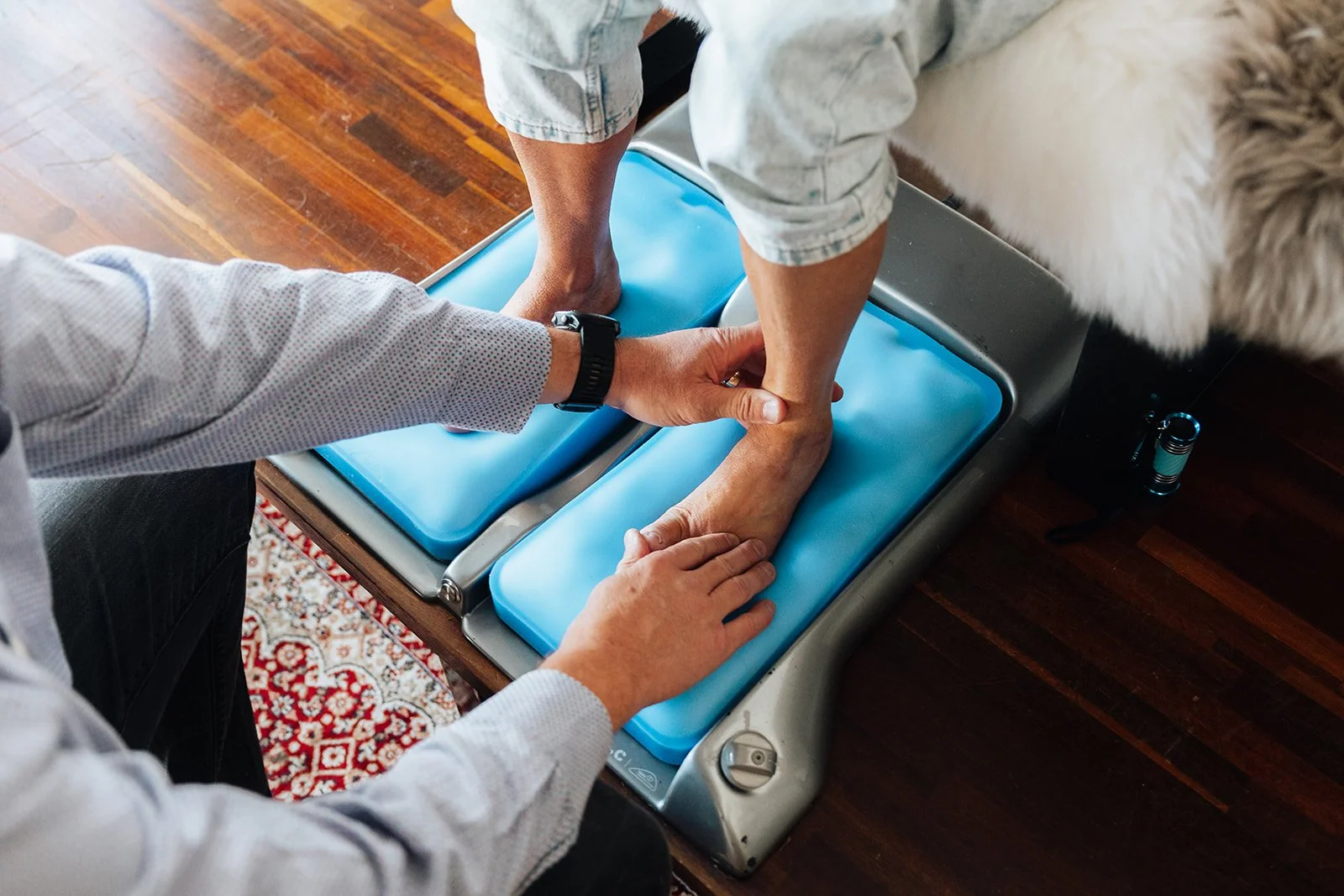
Through detailed biomechanical assessment we evaluate foot structure, lower limb alignment and how your body interacts with the ski boot. From there we develop solutions that improve balance, reduce pain and maximise ski performance.
Our work commonly includes:
• Ski-specific orthotics designed for the unique environment of a ski boot
• Foot and ankle alignment strategies to improve edge control and stability
• Boot interface adjustments to optimise comfort and pressure distribution
• Guidance on boot selection and setup
The goal is simple: balanced stance, efficient movement and comfortable skiing.
For rare and complex cases — particularly skiers who have never been able to ski comfortably — Sentinel can design and create fully customised boot and liner systems to restore comfort and allow people to continue skiing and love their time on the mountain.
Ski Boot Issues & Conditions We Help With
Common issues we help skiers resolve include:
Arch pain and foot cramping
Often caused by unsupported foot structures or excessive muscular effort to stabilise inside the boot.
Cold feet and poor circulation
Foot instability or excessive pressure can reduce circulation and increase sensitivity to cold.
Shin pain or “shin bang”
Pressure through the front of the lower leg caused by poor stance alignment or excessive forward loading.
Toe bang
Repeated impact of the toes against the front of the boot during skiing.
Heel lift
Movement of the heel inside the boot that reduces control and increases friction.
Numbness or nerve compression
Tingling or numbness caused by pressure points or poor foot positioning.
Edge control and balance issues
Alignment problems that affect the skier’s ability to engage ski edges effectively.
Foot fatigue and cramping
Often linked to poor foot stability or excessive muscular effort to maintain balance.
Signs You Should See a Ski Podiatrist
A ski boot is a highly unusual environment for the foot. It’s rigid, restrictive, and designed to transfer large forces directly into the ski. Because of this, even small pressure imbalances inside the boot can quickly lead to discomfort, fatigue or loss of control.
Most skiers benefit from improved pressure distribution and foot stability inside the boot.
You may benefit from seeing a podiatrist if:
Your feet ache, cramp or fatigue during the day
You want to improve your performance
You experience numbness, tingling or cold feet in your boots
You get arch pain or pressure points while skiing
Your toes bang the front of the boot on steeper terrain
Your heel lifts inside the boot when turning
You feel off-balance or struggle to engage ski edges
One foot is more painful or less stable than the other
You have never been completely comfortable in ski boots
You have a history of serious foot and ankle injury, or pathology
Ski orthotics help create even pressure distribution and stable foot positioning, allowing the boot to work as intended.
A stable foot platform improves comfort, balance and ski control. You’ll need less coffee breaks = more laps of the hill.
Got more questions? Check out our FAQs